Cheapest no longer the default: Commission eyes procurement opening for GI products
Press release
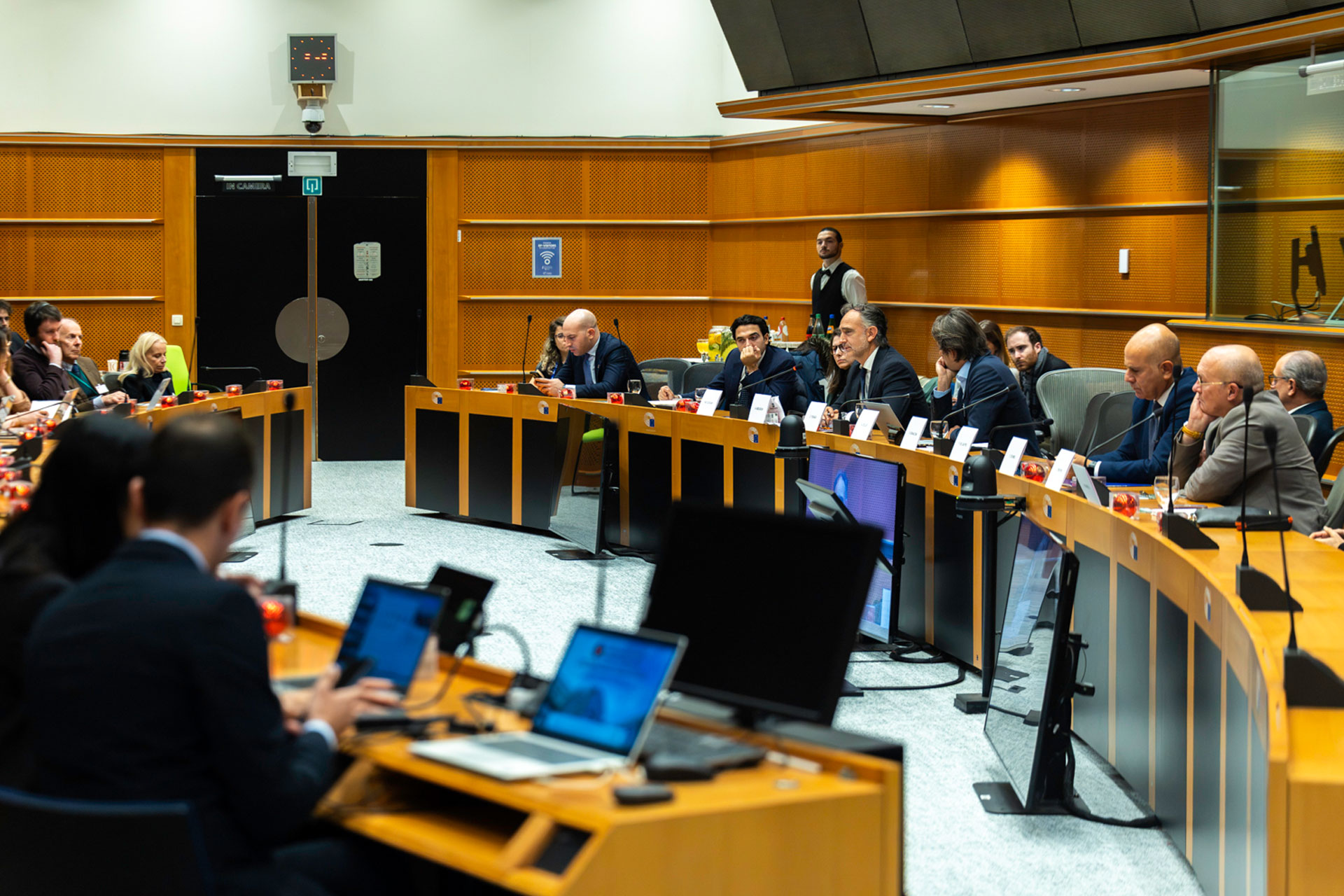
Brussels, 19 November 2026 – New opportunities for Geographical Indications (GIs) in public procurement, including school food supply, emerged as a key topic at a European Parliament conference hosted yesterday by MEP Stefano Bonaccini (S&D, IT) and organised by Fiere di Parma – Cibus.
Speaking at the event, João Onofre, Head of Unit for Geographical Indications at the European Commission’s DG AGRI, highlighted the potential of broader public procurement criteria to help quality food products compete on factors beyond price alone.
“We are now widening the criteria for public procurement so that public authorities are no longer obliged to choose the cheapest product,” Onofre said, pointing to new opportunities for GI producers to access public food supply chains, including school meals.
The discussion comes as the European Commission prepares its 2027 GI Action Plan, aimed at translating the EU’s regulatory framework into concrete measures supporting producers, rural economies and the development of Geographical Indications across Europe.
From protection to economic value
The European Union has established a comprehensive legal framework for Geographical Indications, most recently strengthened by Regulation (EU) 2024/1143. According to Onofre, the priority should now shift from further legislative reform to practical measures that help producers benefit from the existing rules.
The forthcoming GI Action Plan, first announced by Agriculture Commissioner Christophe Hansen at the European Forum on Food Quality in Siena in December 2025, is expected to focus on non-legislative initiatives, including promotion, support for producer groups and the wider development of GIs across EU Member States.
Onofre also highlighted the importance of extending the GI model beyond the countries where it is currently most established, encouraging its development in other parts of Europe to strengthen both economic opportunities and support for the EU’s quality schemes.
The GI economy in numbers
According to new ISMEA-Qualivita figures, the EU counted 3,517 registered geographical indications in 2026, up from 3,484 in 2025 – a net increase of 33 registrations.
The 2026 total comprises 1,637 food products, 1,630 wines and 250 spirit drinks. Italy leads Europe in registered food and wine geographical indications, while France ranks first for spirits, highlighting the diversity and strength of Europe’s quality agri-food model.
The economic and territorial potential of these products was at the centre of the conference, entitled “Beyond Protection: Unlocking the Economic and Territorial Value of Europe’s Geographical Indications – What’s Next for European GIs?”
Turning protection into opportunities for producers and territories
The conference opened with welcome remarks by Antonio Cellie, CEO of Fiere di Parma, and Romina Raucci, Head of Brussels Office at Federalimentare. Moderated by Paolo De Castro, Full Professor of Agricultural Policy at the University of Bologna, President of Nomisma and former Chair of the European Parliament’s Committee on Agriculture and Rural Development, the discussion brought together Carlo Fidanza (ECR, IT) and Salvatore De Meo (EPP, IT), Alessandro Beduschi, President of AREPO, and Marina Floccari, Public Affairs Manager at HOTREC.
The debate explored how the EU’s GI framework can translate into tangible economic benefits for producers and territories, through stronger market access, international promotion and closer connections between food production, gastronomy and tourism.
Participants highlighted the potential of Geographical Indications to support rural economies by connecting producers with restaurants, tourism operators and local communities, while raising the international profile of the regions behind Europe’s quality products.
“Cibus represents excellence not only for Emilia-Romagna, but for the entire Italian and European agri-food sector. It is also a key tool for food diplomacy, helping to promote our outstanding products and open up new markets. The Italian and European agri-food sectors must compete on quality, origin and the credibility of their supply chains, turning this extraordinary heritage into growth, development and jobs across local communities. I would like to thank Fiere di Parma for choosing the European Parliament, for the third consecutive year, as the venue to present its major trade fairs,” said Stefano Bonaccini, Member of the European Parliament and host of the conference.
Cibus: connecting European food excellence with international markets
“Protecting Geographical Indications is essential, but protection alone does not create growth. The next challenge is to turn the value of Europe’s quality food products into tangible opportunities for producers, businesses and territories. This is where trade fairs can make a difference: by connecting producers and consortia with international buyers, retailers, foodservice operators and institutions, they help translate the potential of the GI economy into business opportunities. As the leading platform for the Italian agri-food industry, Cibus aims to play exactly this role, bringing Italy’s food excellence to international markets while supporting the development of the territories behind these products,” said Antonio Cellie, CEO of Fiere di Parma.
Organised by Fiere di Parma, Cibus is Italy’s leading agri-food trade fair, connecting Italian food producers with international buyers and markets. The next edition will take place in Parma, Italy, from 4 to 6 May 2027.